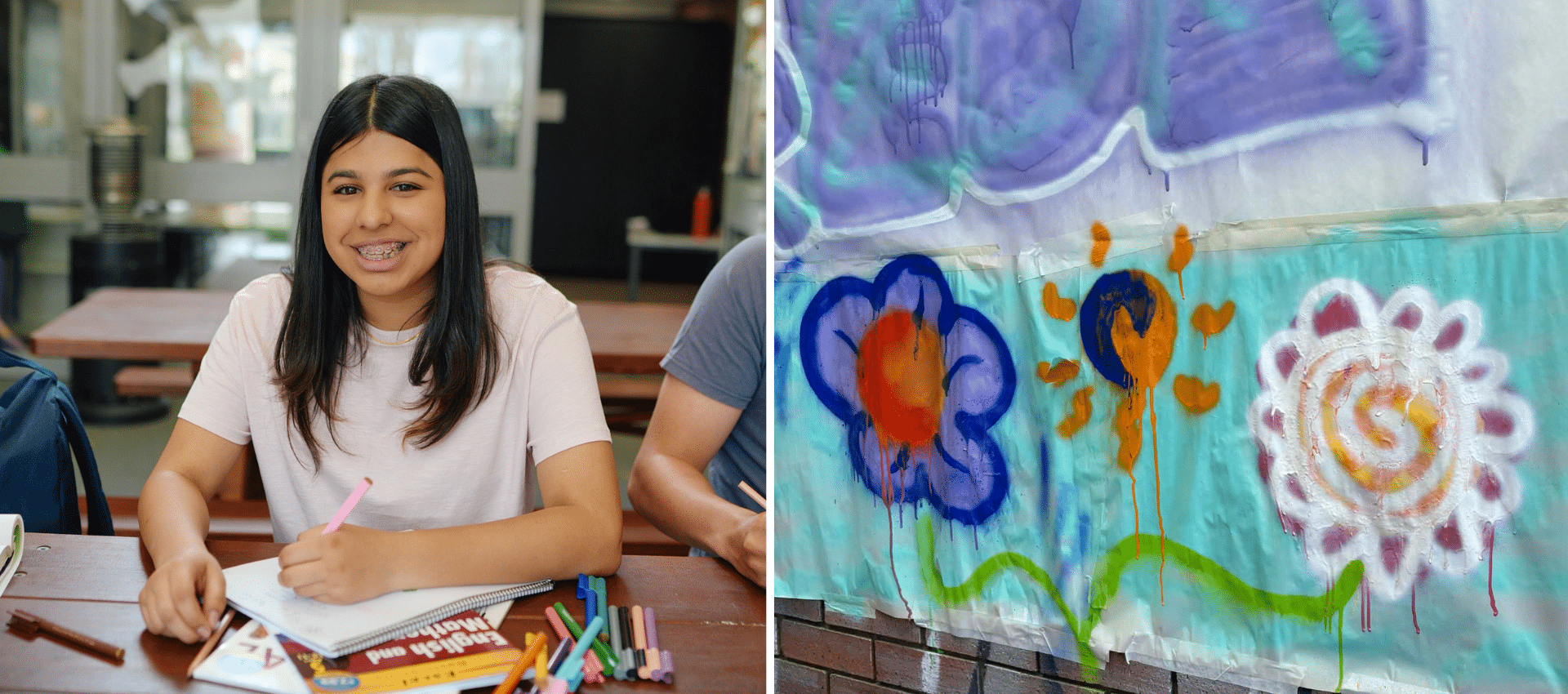
Once a week at Youth Off The Streets’ Key College in Redfern, students participate in art therapy sessions designed to support emotional regulation, creative expression and connection.
Guided by art therapist Emma Fitzgerald and supported by school staff, the sessions offer students a rare combination of safety, structure and creative freedom.
For many students, it’s one of the few places where they can express themselves without judgement, pressure or expectation.
But the calm and connection that unfold in the space don’t happen by accident – they’re deliberately cultivated from the moment students walk through the door.
Creating a safe space
Part of creating a safe space is establishing shared boundaries and rituals that help students settle into the art therapy sessions.
“They set the boundaries, not me,” says Emma. “It’s totally collaborative. They’re made in the first week and then they’re up on the wall the whole year.”
Setting boundaries themselves empowers students to take ownership of the space and understand how they play an active role in how the group functions.
At the start of each session, the group will do a check in using ‘bear cards’: small, illustrated cards that students hold up to show how they’re feeling. Emma and any school staff present will also choose a bear card.
“It’s important because I need to know what they’re thinking and feeling before they enter,” says Emma.
Read more: About the first established Youth Off The Streets school, Key College
The cards give students a way to express themselves without speaking if they don’t want to.
“There’s one bear that’s turned away and often students will choose that one,” says Emma.
Others might pick an excited bear, a tired one, or several at once.
“You feel more than one thing at once,” says Emma. “I work psychodynamically, so even if they pick six cards, that tells me something.”
Just as importantly, the check‑in helps students understand each other.
“It’s not just me seeing it; students can see their friend next to them is tired, or buzzing, or withdrawn,” says Emma. “It also lets them know: this is the space and this is how we start.”
Art therapy in practice
The art therapy sessions themselves offer a grounded environment where students can explore materials and emotions at a pace that feels safe and engaging.
A typical term might include clay work, drawing, modelling activities, spray painting and even playful sculptural experiments.
Many of these activities are simple – like moulding pieces of coloured modelling clay into fruit.
Many sessions are designed to activate the parasympathetic nervous system through repetition, tactile engagement and mindful pacing.
“It lowers cortisol and can offer a physiological counterbalance to the intensity or trauma that students carry with them – particularly when our sessions are at the end of a heightened day,” says Emma.
Not every session is slow or contained; some art-making invites energy and movement.
“We also do large-scale spray painting,” says Emma. “It gets the students moving and there’s a rebellious aspect to it that students connect to.”
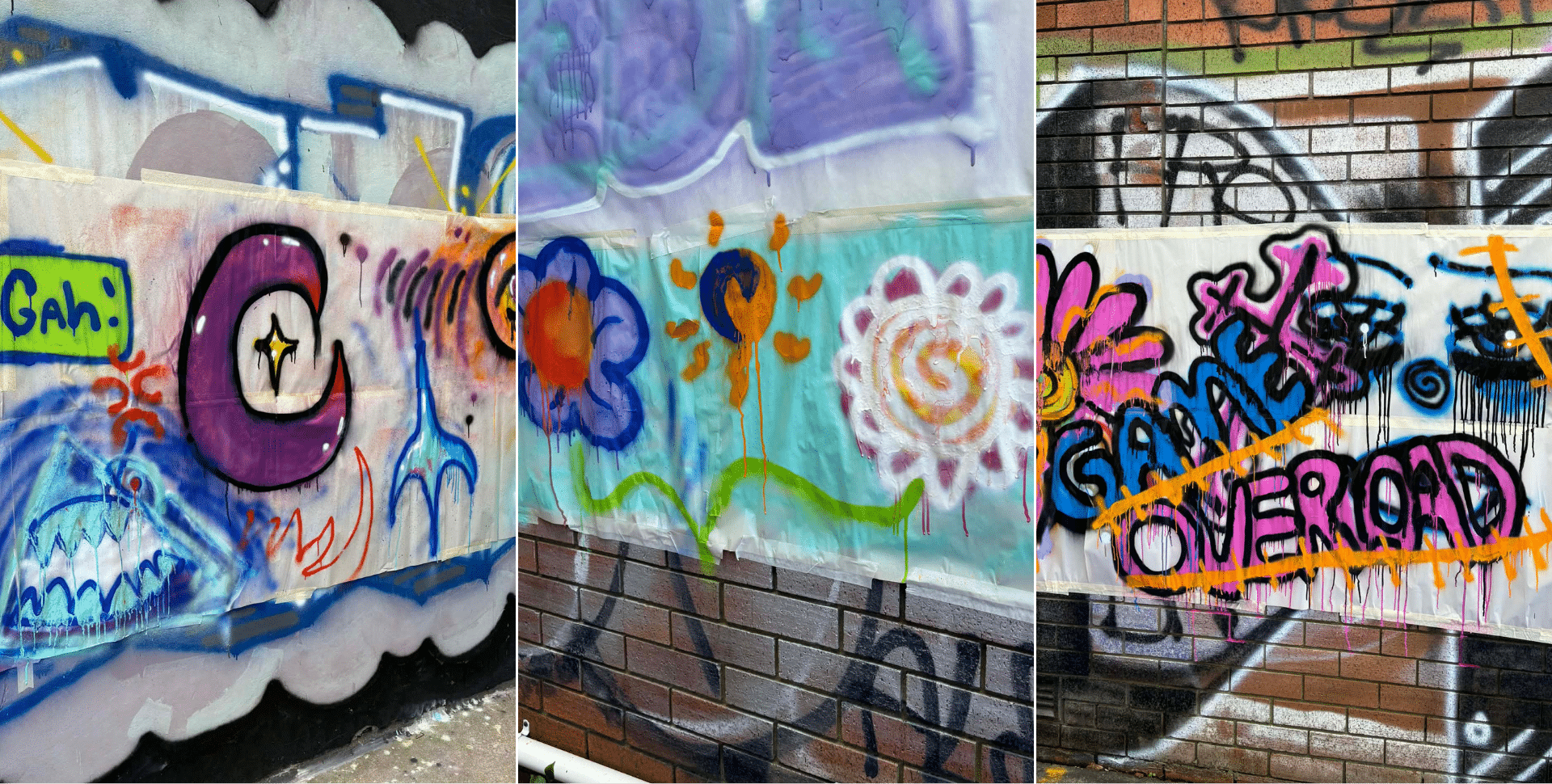
For young people who often struggle with permission, control or fear of doing the ‘wrong’ thing, these activities can be liberating. Emma and the staff at Key College make it clear that the space is safe.
“The students will always say they’re not sure whether they’re allowed to do certain things, even when I’m asking them to do them,” says Emma. “The students will sometimes be worried about making a mess, so I assure them there are no mistakes – just happy accidents.”
As trust builds, Emma introduces more reflective practices, such as body mapping. Using a simple gingerbread-shaped figure, students map their emotions onto parts of the body.
“They choose the emotions – sadness, depression, anger,” says Emma. “Body mapping is about where you might feel it somatically.”
“The distancing makes emotional expression more accessible in that students can talk about the art, not necessarily themselves.”
Simple activities like these can become a bridge to articulating internal states they otherwise wouldn’t have voiced. Sometimes, the process often reveals powerful shared experiences.
“They’ll look at each other’s body maps and notice similar colours or lines in the art of their peers,” says Emma. “I ask them, ‘What are the similarities? What do you notice?’”
Across all the activities, Emma reinforces the core ethos of art therapy sessions.
“It’s about the experience, not what the students create,” she says. “In the therapy space, it’s just: ‘Did you like that? Did you not? Do you want to try something different?’”
What unfolds is a space where art becomes both a tool and a language, where young people can safely explore their emotions and inner self.
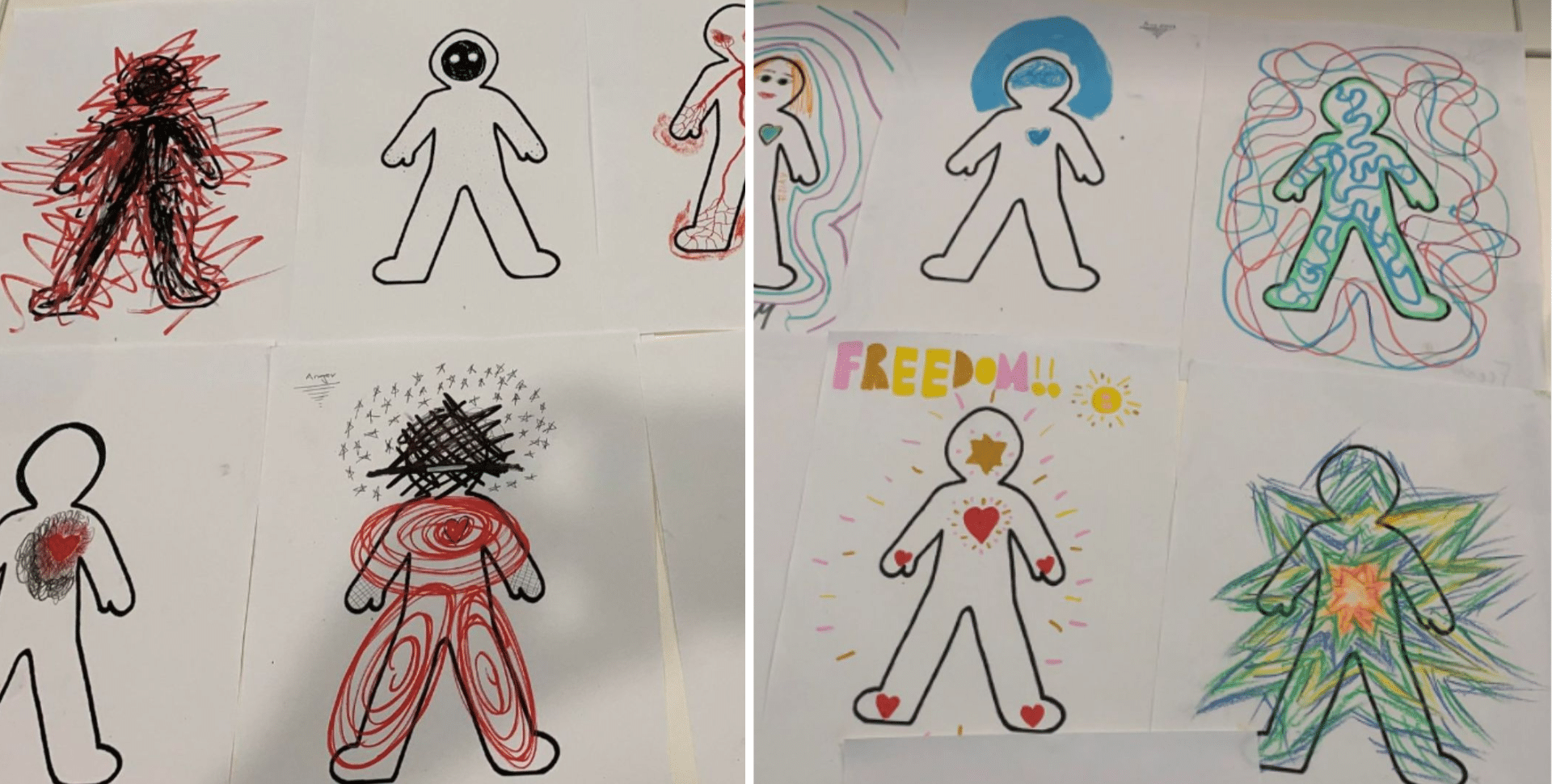
Body mapping different emotions.
Consistency is key
For young people who have lived with instability, predictability in itself can be therapeutic.
“Having art therapy every week helps young people feel that the space is stable,” says Emma. “If it’s inconsistent, it’s harder for them to open up because they think the therapist might leave.”
At Key College, art therapy is an intentional part of the curriculum because of the specific needs of students at Youth Off The Streets schools, many of whom have experienced adverse childhood experiences (ACEs) or complex disadvantage.
“The way that we work at Key is the teachers are actually the first therapeutic worker,” says Jo Nicholson, School Manager at Key College. “They’re generally the first staff member that a student will feel connected to, and it’s so important for a teacher to have a healing relationship with a student.”
“What’s important is that there are other adults in the space who can model, who can set clear boundaries so that the sessions can be a therapeutic safe space.”
For Emma, having the staff in the sessions reinforces the emotional safety of the space.
“Because they know the students well, they’ll offer gentle motivation and push them when needed, because they have that rapport with them,” she says.
The impact of art therapy
Students often experience a noticeable emotional shift even within the span of a single art therapy session.
“At the end of the session, when we do our closing circle, some students will say, ‘I feel a lot more relaxed and calm’,” says Emma. “Those are often the words – a bit more grounded and regulated.”
The impact of slowing down is particularly important in helping students reconnect with their bodies and thoughts. But over time, the changes go much deeper.
Emma often sees students who begin the year hesitant, unsure or openly resistant to the idea of art therapy.
“A lot of young people come in saying, ‘I’m not doing this. This is not my thing,’” she says. “And then by the end of the year, it is their thing.”
“Over time, there’s a growth in expression and there’s a growth in emotional identification,” says Jo. “We also want it to be teachable and something that the students are learning about themselves.”
“I think one great thing about art therapy is that you can continue it on your own. If you know that it’s calming for you to sit down and paint or draw or do clay work, then that’s another tool you have up your sleeve.”
Over time, Emma sees students realise their own capacity.
“It’s them noticing their progress, not me telling them they’ve done so well. It’s them saying, ‘I came into this space and I didn’t like it at all, and now I can actually do it.’”
That sense of agency, she says, is at the heart of the program: helping young people feel safer, more capable and better equipped to move through the world.