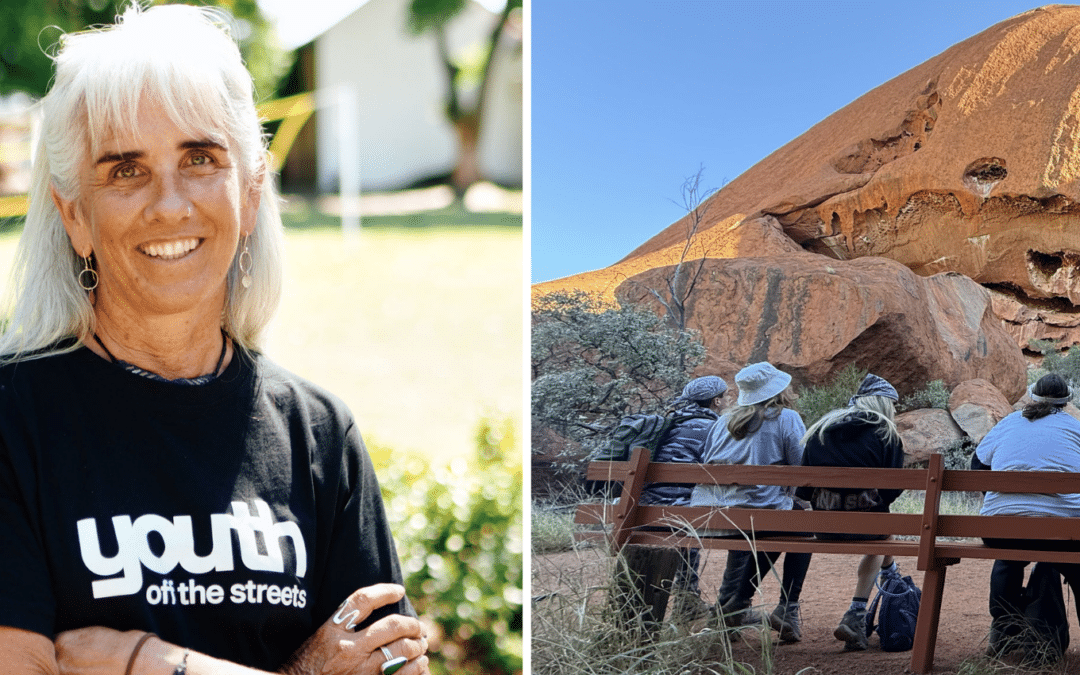
“I was 12 when I couldn’t handle the domestic violence at home anymore,” says Kylie Sharp, Youth Off The Streets’ Domestic, Family and Sexual Violence (DFSV) Prevention and Support Team Lead. “I left because I thought living on the streets would be safer than coming home to a person who used abuse on my mum every day.
“I was scared to become homeless, but nowhere near as scared as I felt at home,” she reflects.
Read: “I knew all the warning signs of abuse. Except when it came to my own husband.”
“The first time I told someone about the abuse and why I was living on the streets, they decided I was the problem – that I was ‘uncontrollable’ – and put me in detention in a girls’ home for two years.
“That was when I swore to do everything I could to ensure that the voices of young people experiencing DFSV would be heard.”
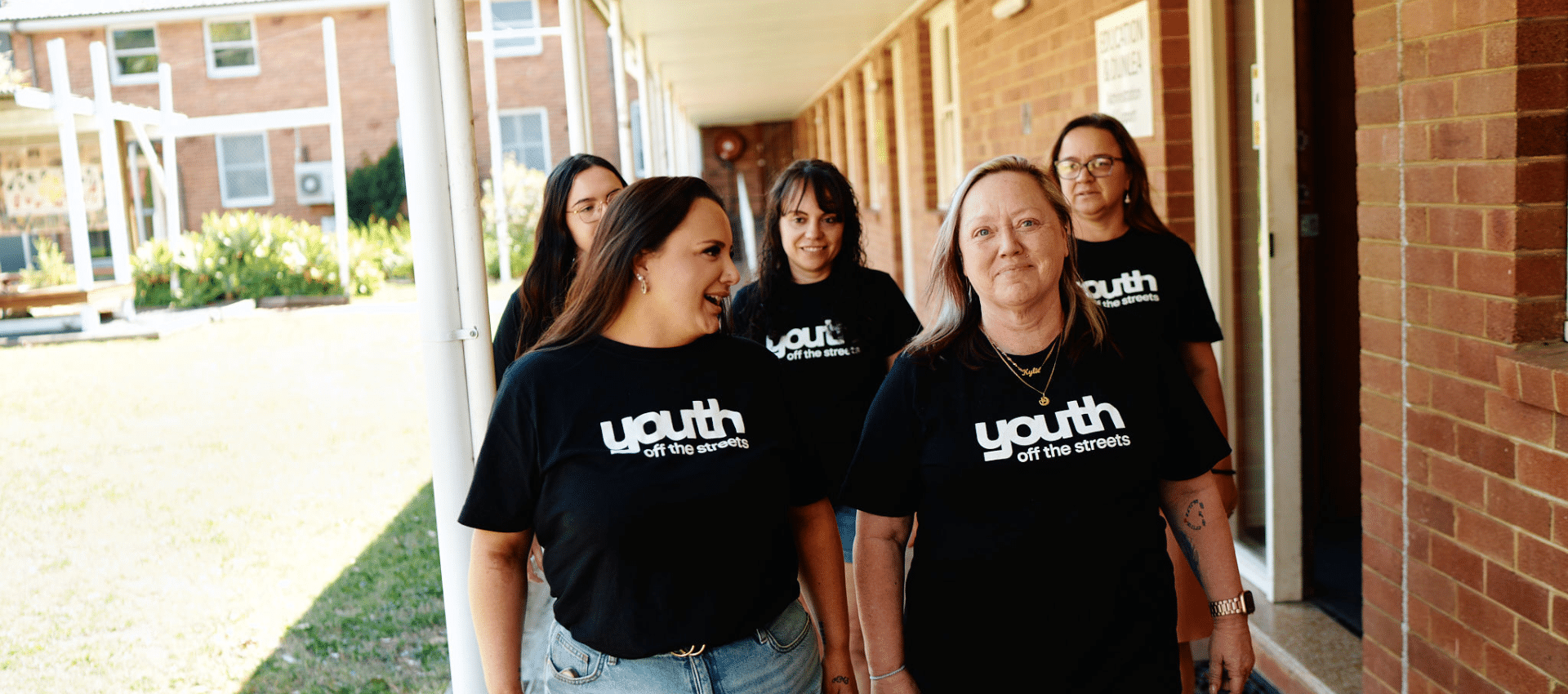
Youth Off The Streets’ DFSV Prevention team
Youth-tailored DFSV education and prevention are priorities for Youth Off The Streets. Today, Kylie leads a team of six DFSV specialists whose expertise ranges from intimate partner violence education to youth work within community service organisations.
Sector data reveals that one in three young people who experience homelessness also experience domestic and family violence. The DFSV Prevention team works to ensure that for Youth Off The Streets’ students, the trajectory into homelessness and complex disadvantage is not inevitable but one that can be changed through care, support and education.
In 2024 alone, 187 students across Youth Off The Streets’ six independent high schools received support from the DFSV team. Of those, 20 students were supported to leave a DFSV situation and move into crisis accommodation.
One of these young people was Mia*, who was identified as being at immediate risk of domestic violence and homelessness. An escape bag was provided to her, supplying her with clothing, toiletries and other essential items, while the team worked to coordinate safe housing and support services.
Now living in one of our crisis accommodation services, the DFSV team continues to provide Mia with ongoing support to help her stay safe, well and in school .
Of the experience, Mia says, “This is the only time I have really felt heard and understood.”
Response not just reaction: The importance of domestic violence education
The DFSV Prevention team at Youth Off The Streets does not only react to incidents or threats of violence. This specialist team plays a proactive role, equipping young people with the knowledge, support and skills necessary to safeguard themselves against potential harm before it happens.
The team’s early intervention DFSV education program, Power Within, is delivered across one term at all Youth Off The Streets high schools, empowering young people to identify the cycle of violence, have conversations about their experiences and take steps to ensure their safety and wellbeing.

Additionally, the team delivers a training package called Safer Conversations to youth sector professionals. The training focuses on how to hold confidential conversations about the individual experiences and needs of the young person impacted by DFSV in safe and supportive ways.
Grace Vincent joined Youth Off The Streets this year and has six years of experience in the field. As she says, the focus on education and intervention is something that sets Youth Off The Streets apart from other youth services organisations.
ABC NEWS: School program Power Within encourages teens to break the cycle of domestic and family violence
“I would say that [DFSV education and prevention] are unique to Youth Off The Streets. A lot of the other work I’ve done has been more crisis-focused – talking to survivors or doing group counselling,” she explains. “But you’re doing that work after the violence has happened, rather than that intervention piece.”
“That Youth Off The Streets makes [prevention] a priority for students is a really unique thing.”
Grace shares the story of a young person who had experienced intimate partner violence and was learning to set healthy boundaries. During a one-on-one catchup, when asked about a new relationship, the student shared that she had chosen to end it.
“She said, ‘You know what? I felt like they weren’t honouring my boundaries and I felt like that wasn’t going to be a healthy relationship for me anymore.’”
As Grace says, “To have a young person who’d had multiple intimate partner relationships that were unhealthy and had a lot of violence to then say, ‘No, they weren’t respecting my boundaries’, is incredible.”