
For First Nations people, community – or ‘mob’ – is at the heart of culture. It’s woven into every part of life, from decision-making to spiritual connection. And for the Hill family, that bond with mob even shapes their work.
Uncle Max is a respected Elder working with Youth Off The Streets in Dubbo. In First Nations communities, Elders are the custodians of culture, wisdom and history – and their guidance commands respect. The kids listen to him,” says Brooke North, a Dubbo-based First Nations Services caseworker. “He’s hard but fair and that’s exactly what they need sometimes.”
Are you looking for First Nations cultural support? Learn more here
As an Elder, Uncle Max is aware of the positive impact he can make on young First Nations people. “My motive is just to keep them on the straight and narrow, to talk to them – when they want to have a talk, we have a yarning circle,” he says. “Just have a yarn about life, because life’s not meant to be easy. Life’s meant to be hard.”
A family matter
Uncle Max has passed down his values of preserving culture and serving the community. One son, Kieran, also works with Youth Off The Streets as a caseworker.
When Kieran explains what he finds most fulfilling about his work, his mind goes to where – or rather, who – instilled his purpose. “Giving the kids the upbringing that I’ve had,” he says. “Trying to show them the right roads. [My dad] brought us kids up – a lot of the kids don’t have that stability in their life. But I want to be there for them and show up every day.”
Some might think working with a parent would be tricky day in and day out, but Kieran quickly shakes his head at the idea. “I always turn to him for advice,” he says.
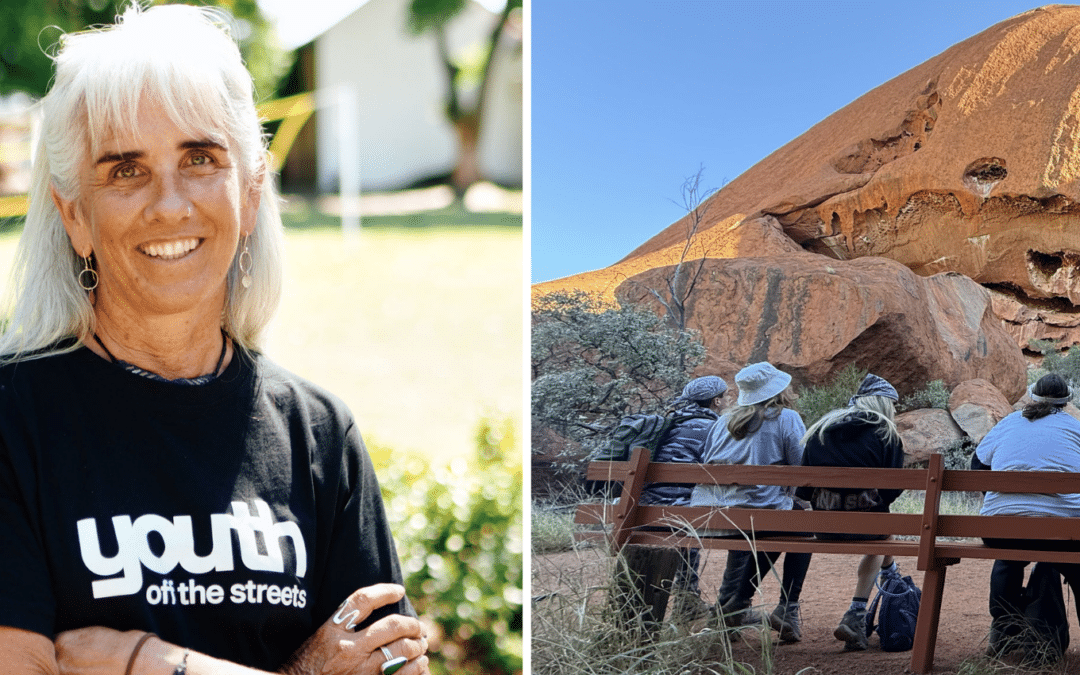
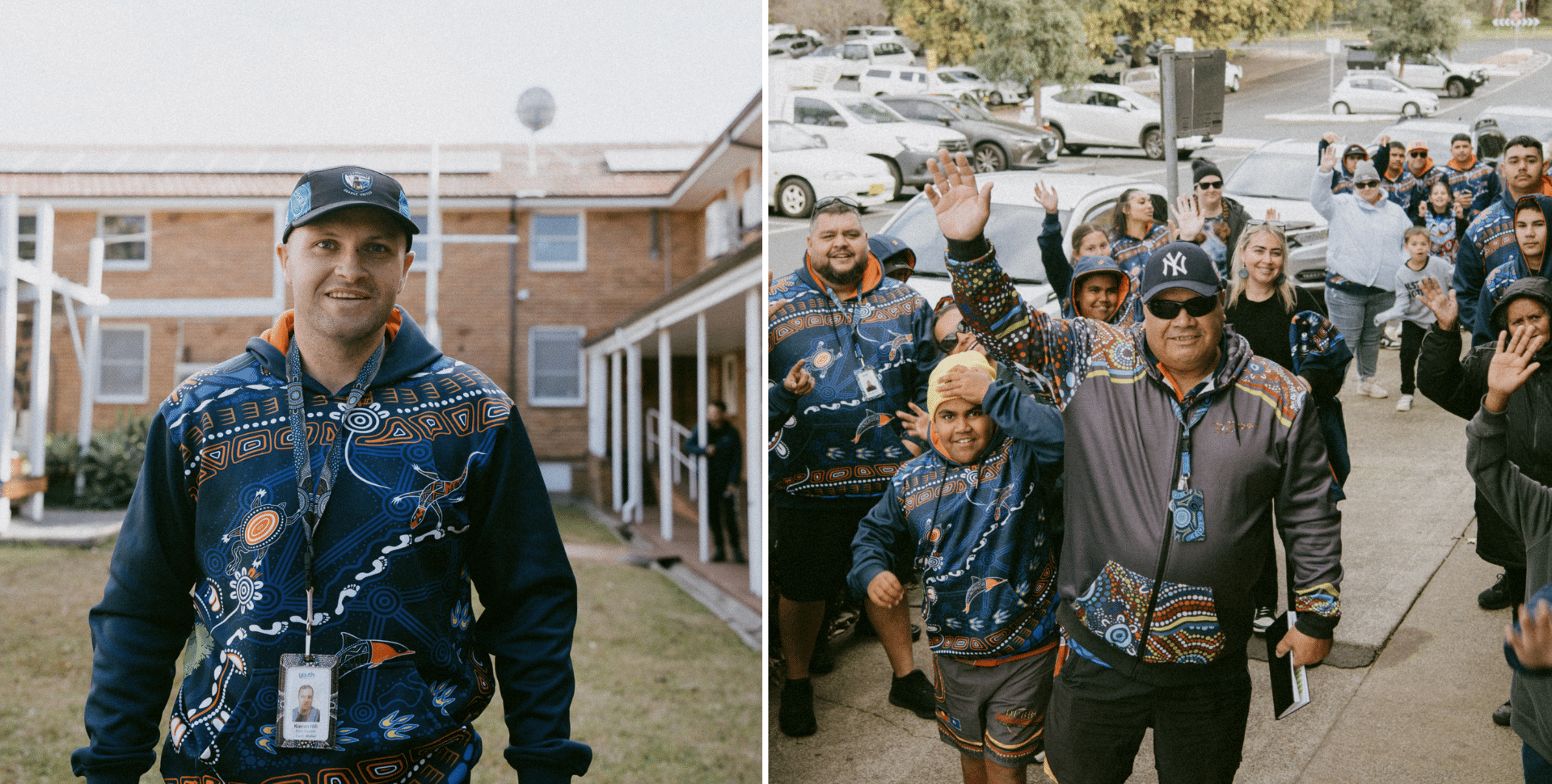 Left, Kieran Hill, continues his father’s life work, uplifting their community; Right, Max Hill, also known as Uncle Max, during a NAIDOC cultural camp hosted by Youth Off The Streets.
At Youth Off The Streets, we understand that collaboration – not just across our services, but with other local organisations – can deliver the best outcomes for the children and young people we support.
Kieahh is Uncle Max’s daughter and Kieran’s sister. Like her family members, she also works in the First Nations community services sector, at Regional Enterprise Development Institute, also known as REDI.E.
During NAIDOC Week in July, Kieahh and a fellow REDI.E facilitator supported a two-day cultural camp hosted by Youth Off The Streets for young people in Dubbo. The following week, her father and brother supported My Journey, My Life, a program for young men aged 15 and up that she delivers through REDI.E.
The next generation: Revisit this year’s NAIDOC Week cultural camp in Dubbo
“[My Journey, My Life] wouldn’t be going ahead if it wasn’t for the boys, simple,” Kieahh laughs when asked about the difference that the collaboration between the two organisations – and between herself, her father and brother – makes to the program. My Journey, My Life has been designed to address violence within relationships and to teach identifiers of healthy and unhealthy relationships, along with immersing young people in aspects of culture and tradition.
Because the program includes male-only cultural components, it was important to find a First Nations man to lead the part. “Before Keiran went to Youth Off The Streets, he was trained [in the male components], so he will deliver that section and then Max will jump in as an Elder for the boys,” she explains.
Working together, for each other
My Journey, My Life is only one example of how Youth Off The Streets collaborates with the local community and other organisations in Dubbo. Every week during school terms, the two organisations help facilitate an employment pathways program, Fit For Work. Other impactful collaborations have followed.
“We jumped in with PCYC and the Youth Police [NSW Police Force’s Youth Officers],” says Kieahh. “We run [a fitness and wellbeing program] called Fit For Life once a month, which will hopefully expand to every fortnight.”
As for bringing his children into his life’s work, Uncle Max acknowledges that he can come across as stern sometimes. “But they’re good kids, they love what they do,” he says of Kieran and Kieahh. “They’re passionate about their work, they both care. They’re passionate, I’m passionate and it’s about giving these kids an opportunity to go forwards, not backwards.”
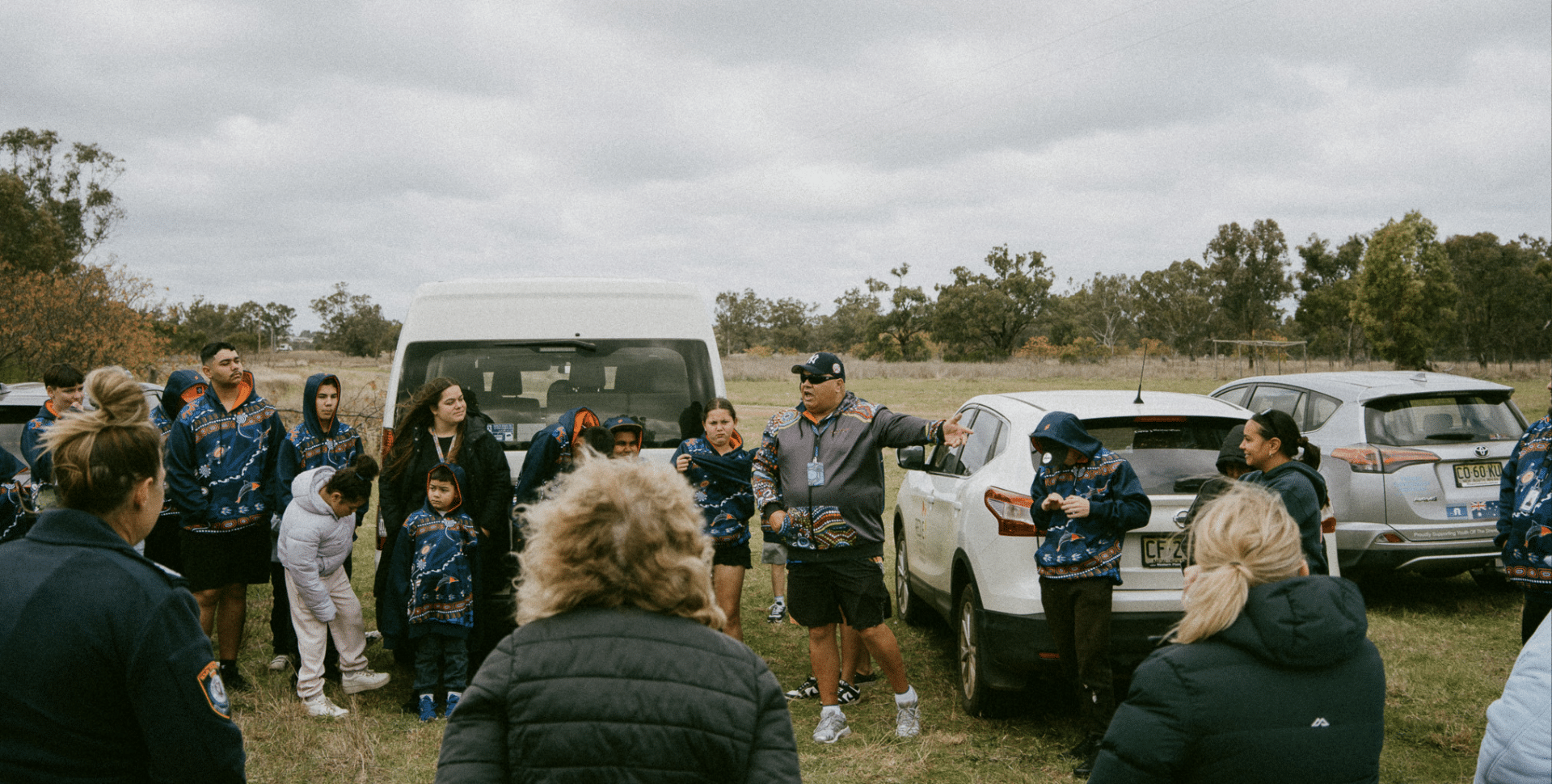 Uncle Max shares the significance of the government-imposed settlement that he was born into with the next generation of First Nations peoples.
When Uncle Max was young, he and his peers felt the only opportunities available to them were sporting careers, and only then if they were talented enough. “Today there’s more opportunities for kids to strive in life and go forward, but it’s up to the individual,” he says. “We’re only here once in life and we’ve got to make the best of it. And that’s what we’re trying to do, to guide them in the right direction.
“If they can take over from us and lead by example, that’s all we want,” he says of the next generation of First Nations young people. “Just for them to lead by example and be proud of who they are and where they come from.”