Not all children and young people thrive in mainstream schools.
The Youth Off The Streets education model acknowledges that many students have experienced Adverse Childhood Experiences (ACEs), which can include neglect, parental substance misuse and exposure to family violence.
That’s why our schools have a trauma-informed education model: to provide a safe, supportive environment where every student has the opportunity to grow and succeed.
“Trauma-informed practice at our schools ensures that education is not just about academic attainment but also about healing and holistic wellbeing,” says Amy Gill, Deputy Principal of Innovation and Impact.
Women’s Health: ‘I escaped domestic violence, here’s my story’
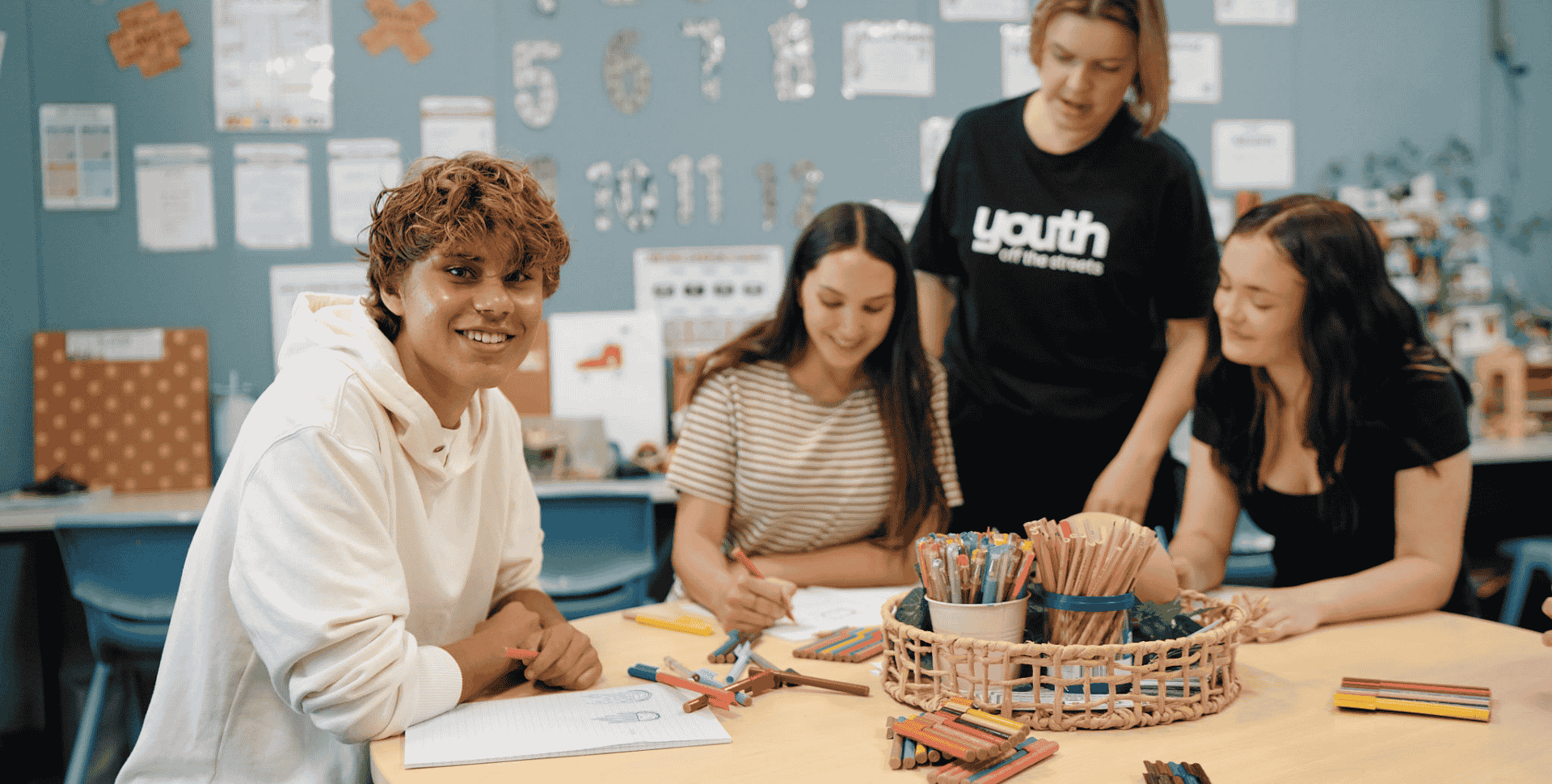
“Embedding trauma-informed approaches means our schools create safe spaces where students feel valued, seen, accepted and connected to adults,” she says.
“The focus on positive relationships reduces the risk of re-traumatisation and allows young people to re-engage with learning and the broader community.”
At our six alternative high schools, teachers and staff are trained to recognise certain behaviours as expressions of trauma.
They can identify dysregulation and respond with co-regulation strategies, hold boundaries firmly but with compassion and are trained to be culturally responsive, recognising how trauma intersects with colonisation, systemic disadvantage and cultural identity.
“This equips staff to interpret challenging behaviour as communicating unmet needs and to respond with empathy, structure and consistency,” says Amy.
We use a variety of strategies to support students impacted by trauma.
One of these is having “a network of teachers, psychologists, First Nations supports and community members collaborating around each student,” says Amy.
“Having holistic support, including youth work support, counselling, family engagement and supporting external referrals, means students’ wellbeing needs are addressed alongside education.”
Other strategies include replacing punitive discipline with dialogue and accountability through restorative practice and offering flexible, personalised learning to encourage students to re-engage with school.
Incorporating cultural programs and pedagogies into schooling also helps First Nations students build identity, belonging and leadership.
“We’ve seen first-hand the positive influence trauma-informed approaches have had on student engagement and their sense of safety,” says Amy.
“We firmly believe that no child is ‘unschoolable’ and that school is the best place for healing-centred engagement. For us, education is not just about teaching, it’s about transformation.”