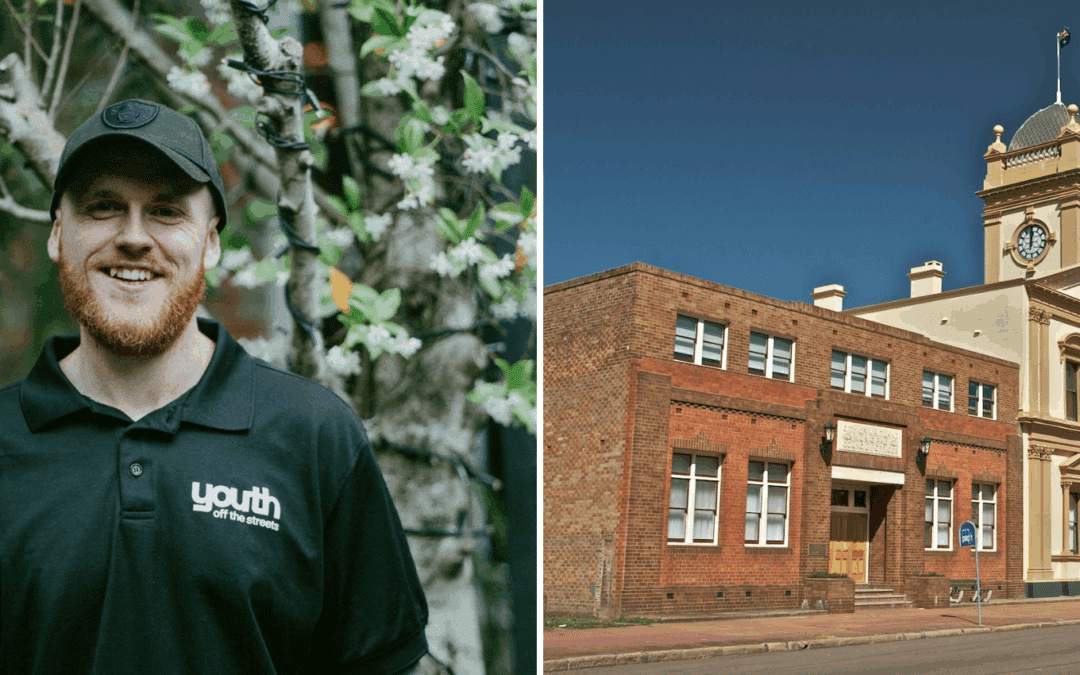
“I always wanted to be a teacher from when I was a kid,” says Scott Coleman. “I had some great teachers growing up and I wanted to give back in a similar way to how they did for me.”
Working alongside Scott at Bowen College are teachers and a Student Support Learning Officer. “I’ve worked in some incredible, huge schools,” says Scott. “And I’ve never met teachers as capable as the teachers we have here.”
The teachers’ expertise is complemented by vocational guidance and training from Youth Off The Streets’ Registered Training Organisation (RTO), which runs a session at the school once a week.
Wellbeing at Bowen College
In addition to their teachers, the students at Bowen are supported by a wellbeing team, comprised of an on-site psychologist, Tash, and youth worker, Kane. “They focus on the wellbeing of our young people and they do a great job,” says Scott.
Every week, Kane runs a strengths-focused program. “It’s about highlighting the positive things the young people have going for them,” Scott explains. “What do their strengths mean? And how can they use them?”
The young people then apply their understanding of their strengths to a personal interest project.
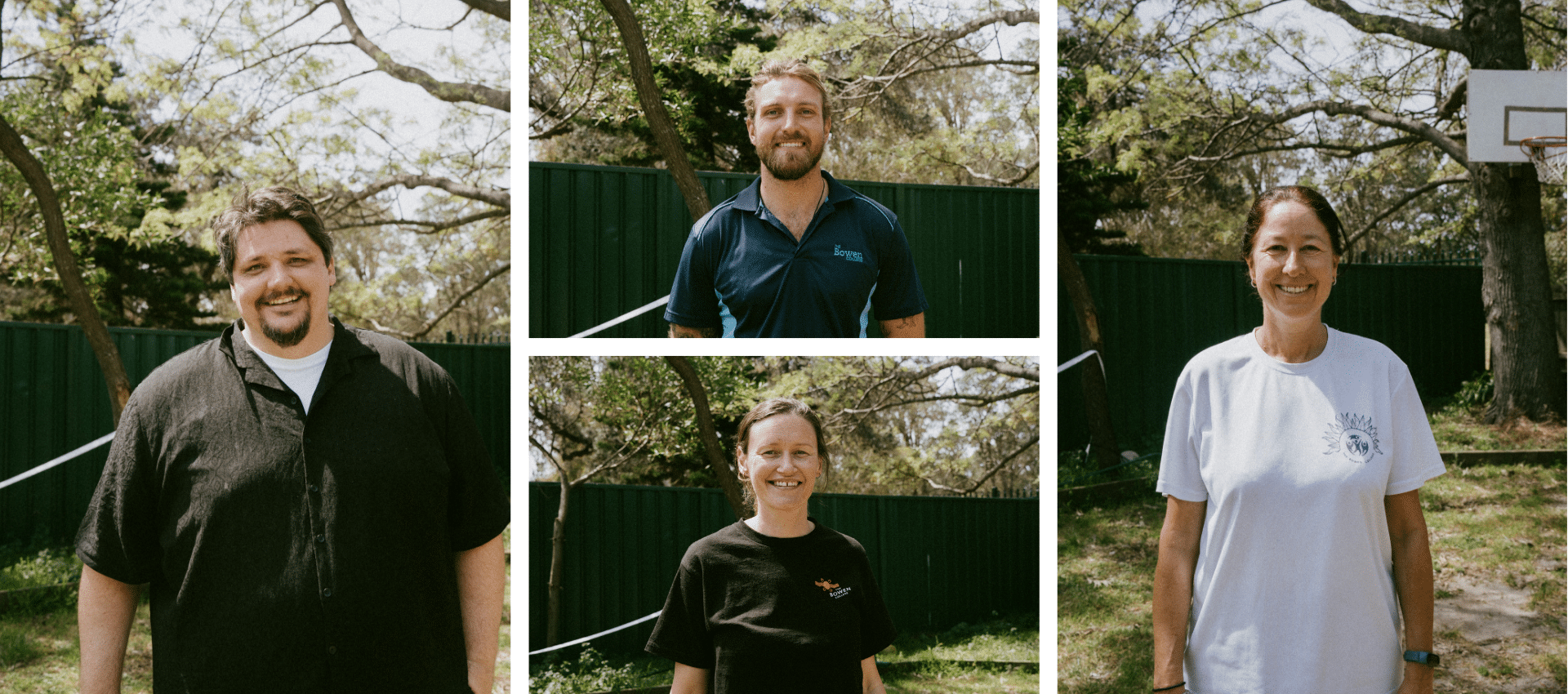
 Left to right: Scott, School Manager of Bowen College; Kane, youth worker; Tash, psychologist.
For Frida*, that project is designing and sewing her own clothes. “I want to go to uni and do something in fashion design,” she says. To support her aspirations, Bowen staff sourced a sewing machine for her to use during the time dedicated to personal interest projects.
“These projects are about students finding something they’re really passionate about, whether it gives them the best chance for a job or even just a skill to develop,” Scott explains. “Frida is the most artistic and capable young person you’ve ever met. She’s into music, she can sew and she’s into fashion. She’s into so many incredible things.”
The Youth Off The Streets school difference: Our wellbeing programs and initiatives
Frida says that the biggest difference between Bowen College and her previous mainstream school is the level of support she receives. “It’s just a lot of one-on-one time and often it doesn’t really feel like school,” she says.
The school week ends with a day dedicated to service-learning, which might involve volunteering at Taronga Zoo or visiting residents in a local aged care home.
“A lot of the residents have faced and overcome adversity,” Scott shares. “We’re there to learn from them and they learn from us. It’s about giving back to community.”
When smaller class size equals bigger impact
Beyond established wellbeing programs, staff at Bowen College ensure that students are supported through their individual challenges and, sometimes, traumatic circumstances.
“One of our young people is transitioning from female to male and at the same time has experienced domestic violence and homelessness,” Scott shares. “And that’s all happened over a span of eight weeks.”
Scott shares that staff secured safe housing for the young person and they are being supported during this highly sensitive time. “That moment of someone having to escape domestic violence and find a home, somewhere else to live, that’s the impact you can have.”
After working in many schools, Scott is certain that without Bowen College, these students wouldn’t get the education they need to reach their potential.
“Everyone who comes here needs to come here,” he says. “As someone who’s worked in mainstream education, there’s no way they can get through in that mainstream space [due to their individual needs].”
The vision for Bowen College, says Scott, is to expand and reduce the waiting list of young people hoping to enrol in the school.
“They need this alternative to give them the chance to have success. And they do have the potential to achieve great success.”
Scott reflects on one young person who spoke with local primary school students about what he had learning during his service-learning at Taranga Zoo. “He’d never done a presentation at school before, but he got up in front of these kindergarten kids and presented a snake to them.”
Scott explains that such an achievement is unlikely to happen in a mainstream education setting, as it took the student six weeks to trust the staff, even with the tailored support that Youth Off The Streets schools offer.
“It was one of those moments where I had tears in my eyes because you’re like, ‘Well, this is what you do this for, this moment where this kid has that success’.”