
Note to reader: This article was written in 2025 and the program is no longer running today.
The cornerstone of Laverne Te Huia’s identity is her Māori culture. But it wasn’t always that way.
“I grew up around language, my parents were fluent,” Laverne says. However, as a result of the trauma inflicted by colonisation, Laverne’s parents are among the generations of Māori people who discouraged language and culture in their children, encouraging assimilation instead.
“Because of the trauma they experienced, they wouldn’t allow us to learn,”she recalls. “That was beaten out of them, basically; their language and our customs, and protocols. I never grew up in it.”
Today, Laverne is a caseworker at Youth Off The Streets, based in Logan, Queensland. A significant number of young people identify as Māori or Pasifika in Logan, with an estimated population of over 8,700 individuals from these communities. Despite this strong cultural presence, many Māori and Pasifika students face challenges in mainstream education systems, including disengagement, low attendance and limited cultural representation in school curriculum.
Laverne has set out to change that.
Youth Off The Streets’ Kapa Haka program
Laverne identified a gap in culturally responsive programming within schools that affirms identity, fosters pride and builds connection to Māori or Pasifika heritage. Many students lack opportunities to learn their ancestral languages, participate in traditional practices such as Haka, Waiata (song) and Poi, or to engage with elders who can guide them in cultural knowledge and values.
Within her role, Laverne engages local school communities, running a cultural Kapa Haka program that sees her visiting students weekly, passing on the values that are intrinsic to Māori culture. This program seeks to intervene by embedding cultural learning and performance into the school experience, guided by a Māori elder and community leaders.
By strengthening cultural pride and identity, the program aims to improve cultural connectivity and wellbeing and foster a sense of belonging and achievement.
While this program is aimed to support Māori and Pasifika cohorts, it is open to children and young people from all backgrounds, with the program focusing on inclusion and embracing diversity. This year, between 50-60 high school students participated in the program, with four student leaders emerging from the practices for haka and guitar.
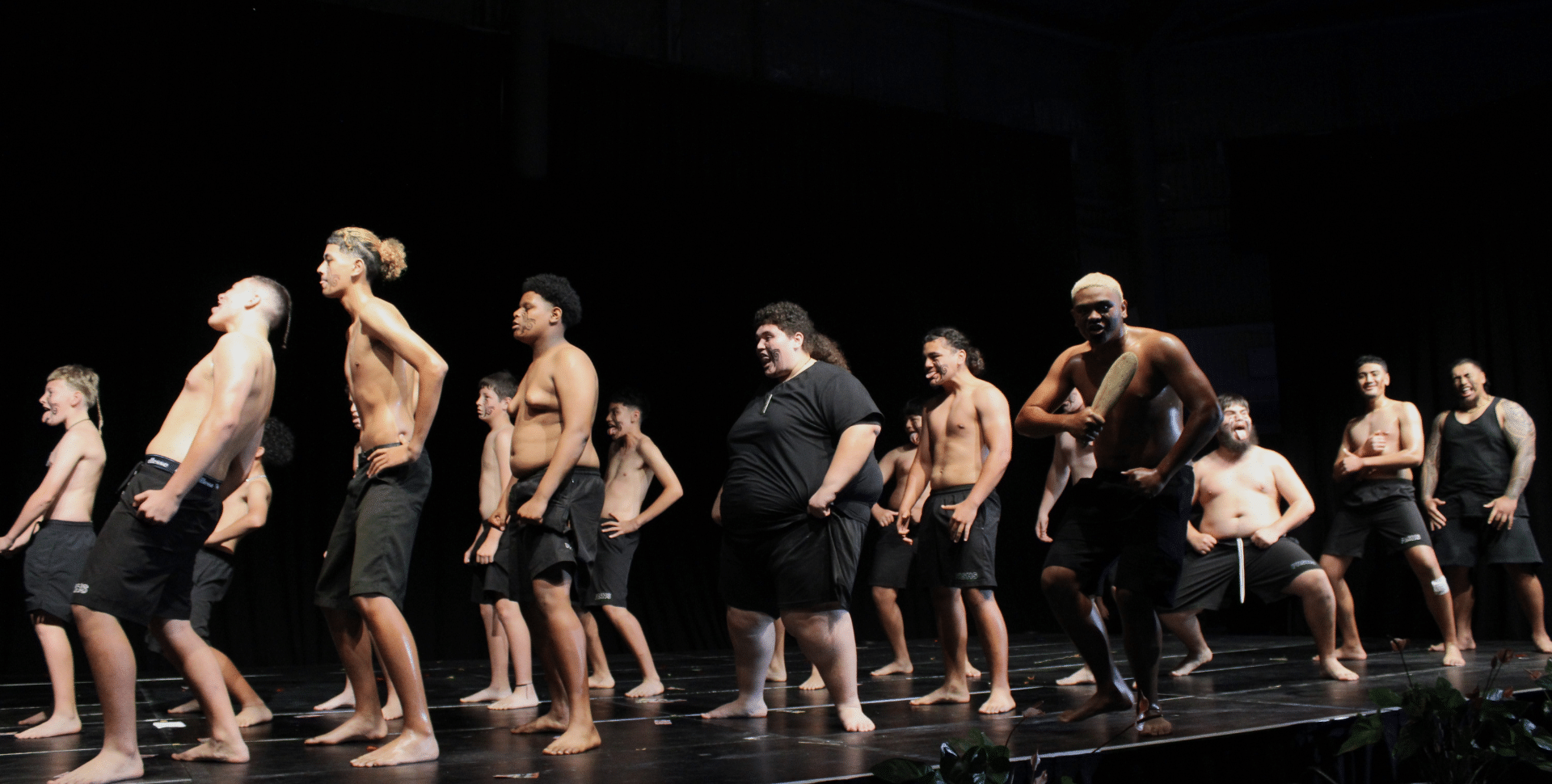 The Kapa Haka program culminated in a final performance in front of peers and community.
“The practice then became student-led,” Laverne explains. She was able to instill and affirm leadership qualities, remind the young people that they are leaders and mentors for peers, family and school. The young people then took the initiative to arrange for extra practice sessions so all students felt comfortable with what they had learned. “I was there to encourage, guide and direct.”
“It’s who I am,” she states of her heritage, whose values she proudly imparts on the children and young people. “Regardless of which country you’re living in at the time, or where you’ve come from within New Zealand, you always get this calling [to return].”
Kapa Haka program outcomes
Beginning in May and ending in September, the program culminated in a performance at the participating school’s Multicultural Night, where traditional song and dance from a variety of cultures are performed for families and the community.
Following the evening, students were asked to respond to an anonymous feedback form. 93.75% of participants said the program helped them feel connected to their culture, with an incredible 100% saying they felt proud of their culture and that it enabled them to build friendships and connect with others.
“Her dedication, passion and cultural leadership have had a profound impact on the students, staff and wider school community,” says Tess Laybourn, Youth Off The Streets’ Logan Team Leader. “The outcomes speak volumes — from the strong student attendance and engagement, to the emergence of young leaders, and the overwhelmingly positive feedback from participants.”
“The pride and connection the young people felt was evident not only in the survey results, but in the energy and emotion of the Multicultural Event performance,” she adds. “Laverne created something truly special.”
“Miss Laverne is awesome, we all loved and appreciated her so much,” one young person said. Another said, “Miss Laverne was such a great help to openly caring for us and helping with understanding more of our culture.”
“This program was amazing,” another added. “And I can’t wait to see this program grow even more.”
“Her ability to weave Māori cultural values with Youth Off The Streets’ principles is inspiring,” Tess concludes. “She’s helped build a space where young people feel seen, proud, and connected, and where culture is celebrated with authenticity and heart.”